
What’s the Most Common Reason People Rent the Wrong Bin Size?
- Karan Chawla
.jpg/v1/fill/w_320,h_320/file.jpg)
- Dec 23, 2025
- 4 min read
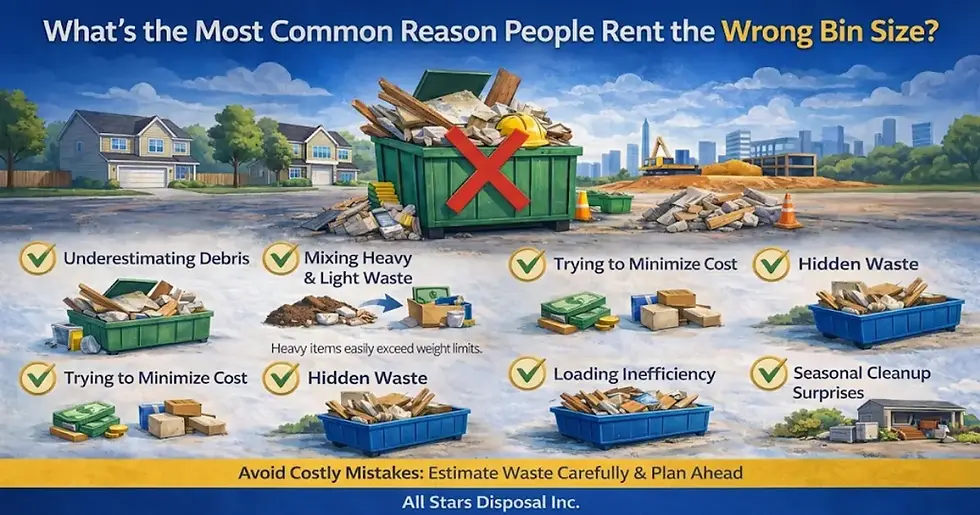
Choosing the right bin size seems simple—until the project begins. Many homeowners and contractors discover too late that the bin they rented is either overflowing or far larger than needed. Renting the wrong size is one of the most common and costly mistakes in waste management, often leading to delays, extra fees, and unnecessary stress.
If you’re planning a bin rental Mississauga, understanding why people so often misjudge bin size can help you avoid these pitfalls and keep your project running smoothly. This article breaks down the most common reasons behind this mistake and how to make a smarter choice from the start.
Underestimating How Much Waste a Project Creates
The most common reason people rent the wrong bin size is simple—they underestimate the volume of waste their project will produce.
What looks manageable at first can grow quickly once work begins. Materials expand when removed, broken down, or stacked unevenly. Items like drywall, wood, insulation, and old furniture take up far more space once they’re no longer neatly installed.
Homeowners often think:
“It’s just one room.”
“I’ll break everything down.”
“It won’t take up that much space.”
In reality, debris accumulates faster than expected, and bins fill up sooner than planned.
Visualizing Space Is Harder Than It Seems
Most people aren’t used to estimating cubic yards. Without experience, it’s difficult to picture how much waste will fit into a bin.
For example:
A small bathroom renovation can fill more than half a medium-sized bin.
Old cabinets and countertops take up far more room once removed.
Yard waste piles look small until loaded.
This lack of visual reference leads many people to choose the smallest option, assuming it will be enough.
Mixing Heavy and Light Materials
Another reason for choosing the wrong bin size is misunderstanding material weight versus volume. Some materials are bulky but light, while others are compact but extremely heavy.
Common mistakes include:
Mixing soil or concrete with household junk
Loading roofing shingles into general waste bins
Adding bricks or stone to bins meant for light debris
Even if the bin isn’t full, weight limits may be exceeded, resulting in additional charges or rejected pickups.
Trying to Save Money Upfront
Many renters select a smaller bin to reduce upfront cost, believing it’s the more economical option. Unfortunately, this often backfires.
When a bin is too small:
Additional bins may be needed
Overfilled bins can’t be picked up
Projects may pause while waiting for replacement
The combined cost of extra rentals, delays, and fees often exceeds the price of choosing the correct size initially.
Not Accounting for Hidden Waste
Projects often generate waste that isn’t obvious at the planning stage.
Hidden waste includes:
Packaging materials
Broken tools or fixtures
Unexpected demolition debris
Old materials uncovered mid-project
As the project evolves, waste volume increases—but the bin size stays the same.
Overestimating How Efficiently Waste Can Be Loaded
People often assume they can load a bin perfectly, stacking items neatly and breaking everything down. In practice, this rarely happens.
Real-world loading challenges include:
Irregular shapes that don’t stack well
Time constraints during demolition
Safety concerns when breaking materials
Gaps form quickly, reducing usable space and causing bins to fill faster than expected.
DIY Projects vs. Professional Experience
Contractors typically have experience estimating debris volume. Homeowners doing DIY projects often don’t.
DIY projects tend to:
Take longer
Produce uneven debris
Generate more waste through trial and error
This learning curve contributes to incorrect bin size selection, especially for first-time renters.
Seasonal Cleanups Create More Waste Than Expected
Spring and fall cleanups are another common scenario where bin size is misjudged. Yard waste, old furniture, and household junk add up quickly.
What starts as “just decluttering” can turn into:
Old storage contents
Broken appliances
Accumulated renovation leftovers
The result is a bin that fills up far sooner than planned.
How Renting the Wrong Bin Affects Your Project
Choosing the wrong bin size doesn’t just impact waste removal—it affects the entire project timeline.
Common consequences include:
Overflowing debris piles
Safety hazards on-site
Delayed work progress
Increased disposal costs
These issues can be avoided with better planning and realistic expectations.
How to Choose the Right Bin Size
To avoid renting the wrong size, consider these steps:
Estimate Conservatively
When in doubt, choose a slightly larger bin. Extra space is better than running out of room.
List All Materials
Write down everything being removed—not just the obvious items.
Separate Heavy Materials
If your project includes concrete, soil, or bricks, plan a separate bin if needed.
Plan for the Unexpected
Assume additional waste will appear once work begins.
Local Knowledge Makes a Difference
Local experience helps identify common waste patterns and project needs. Providers familiar with Mississauga projects understand what types of debris are most common and how quickly bins fill up.
All Stars Disposal Inc. helps customers choose appropriate bin sizes by considering project scope, materials, and local disposal requirements—reducing the risk of costly mistakes.
Frequently Asked Questions (FAQ)
What happens if my bin fills up too quickly?
You may need an additional bin or an early pickup, which can increase costs and delay your project.
Is it bad to rent a bin that’s too large?
Not necessarily. A slightly larger bin often provides flexibility and prevents overfilling issues.
Can I change bin sizes after delivery?
In many cases, changes are possible, but availability and scheduling may affect timing.
Do different projects require different bin sizes?
Yes. Renovations, cleanouts, landscaping, and construction all produce different types and volumes of waste.
How can I avoid overweight charge?
Separate heavy materials, choose the correct bin type, and avoid mixing dense debris with light waste.
Final Thoughts
The most common reason people rent the wrong bin size is underestimating how much waste their project will actually produce. Misjudging volume, weight, and loading efficiency leads to bins filling faster than expected—and costs rising unexpectedly.
Planning ahead, accounting for hidden debris, and choosing a realistic bin size can make your bin rental Mississauga experience smoother, safer, and more cost-effective. When waste removal is planned properly, the entire project benefits from better flow, fewer delays, and greater peace of mind.


Comments